
Ballots Without the Boat and Polling Stations Without People: A Chronicle of a Historic Public Rejection

Ballots Without the Boat and Polling Stations Without People: A Chronicle of a Historic Public Rejection

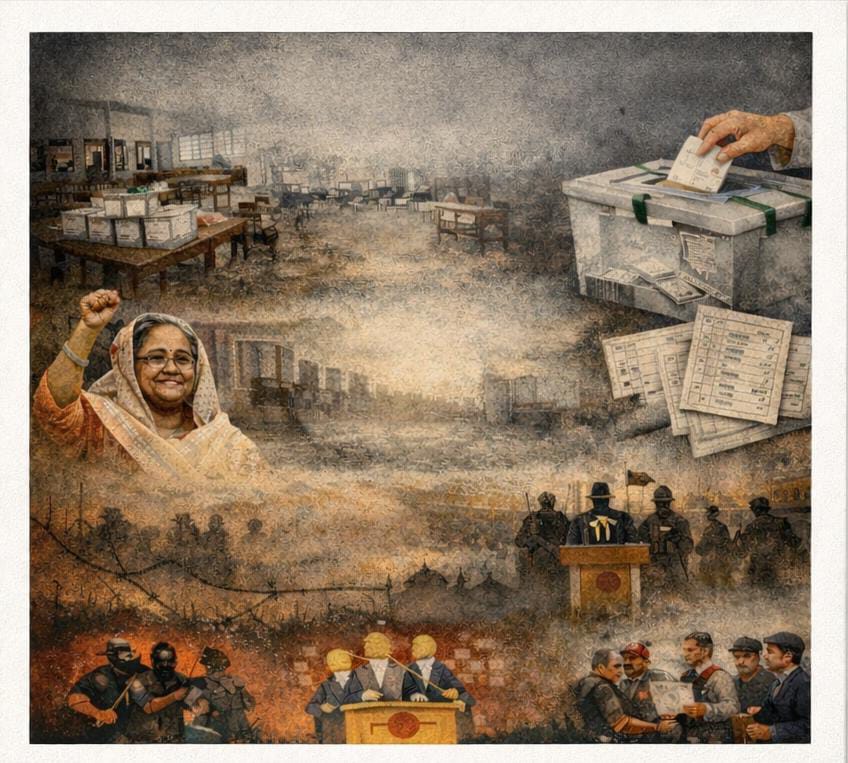
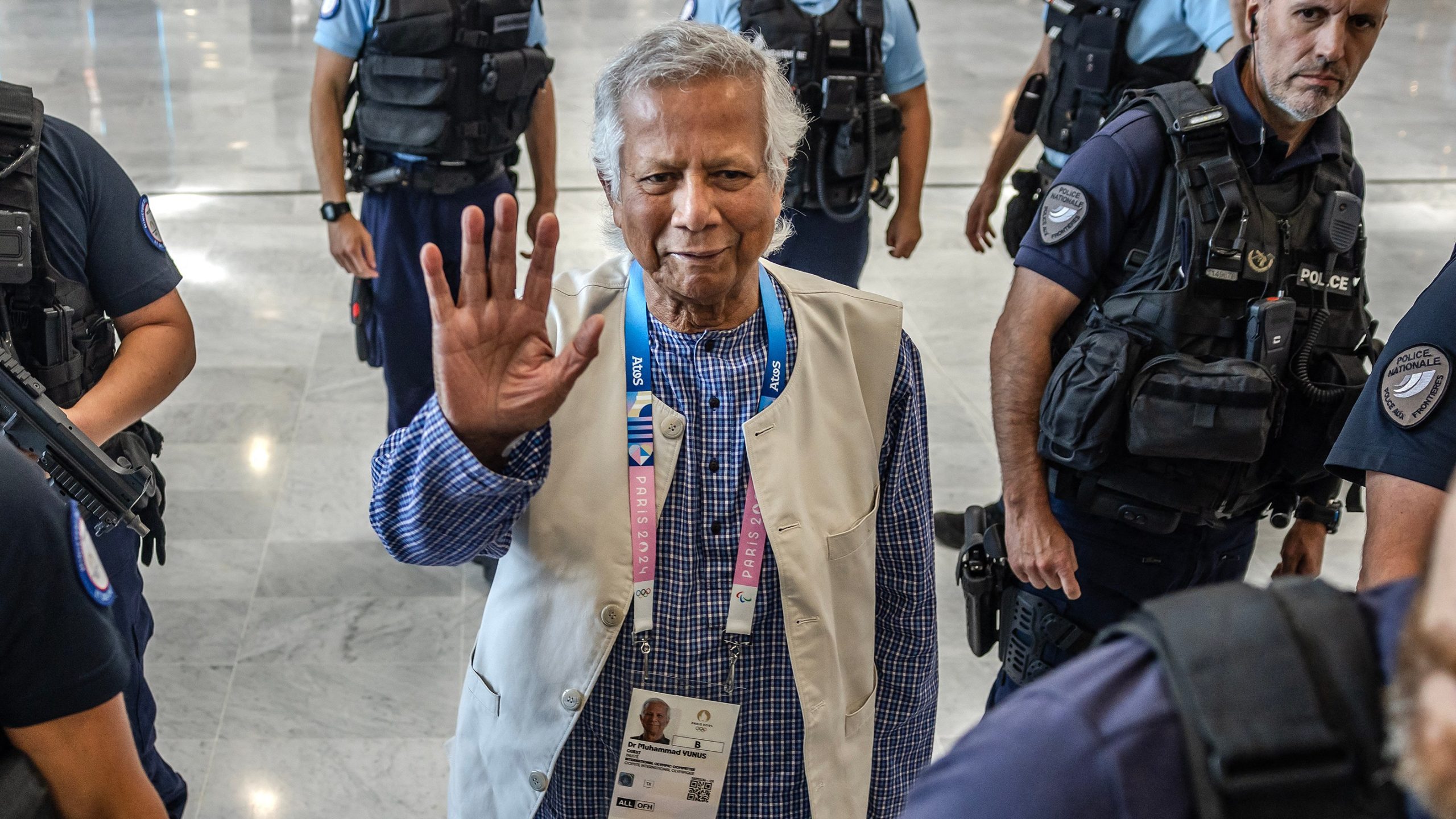
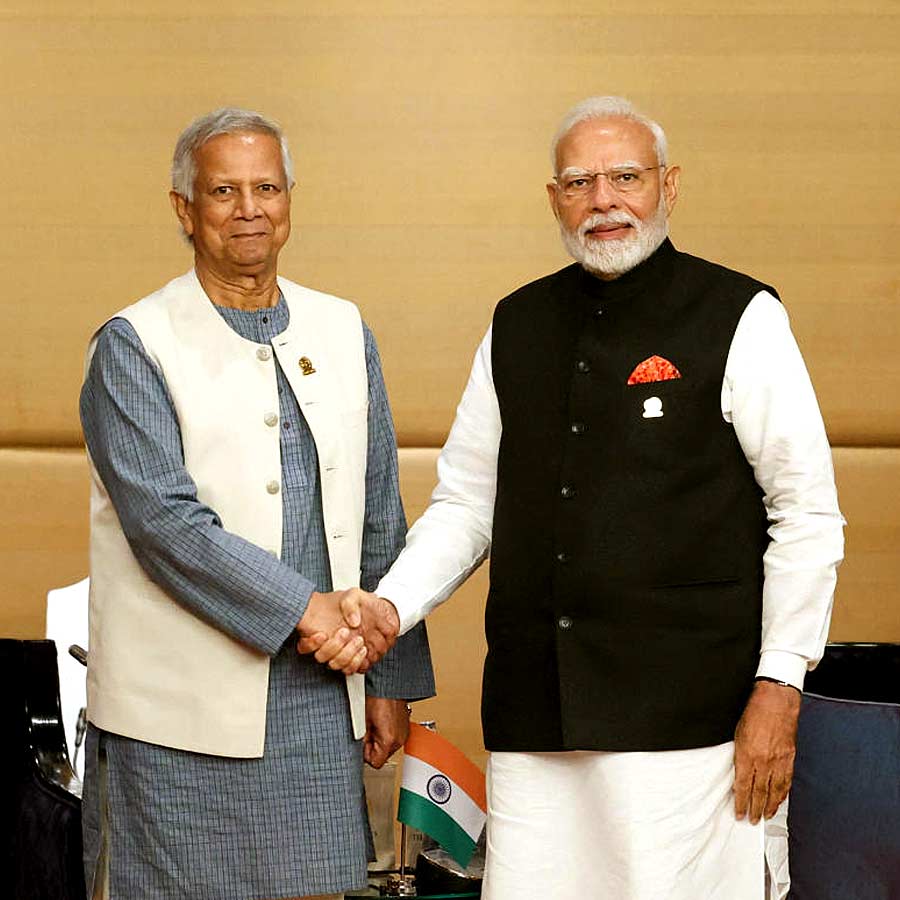
12 February 2026 will not be remembered in Bangladesh’s political calendar merely as the day of an election. Rather, it will be engraved in history as a shameful moment that drove the final nail into the coffin of democracy. By conspiratorially excluding the Bangladesh Awami League, the party that led the great Liberation War, from the political arena and the electoral process, the unconstitutional interim government led by Dr. Yunus staged a one sided and orchestrated farce. The conscious citizens of this country rejected it with deep contempt. This election was by no means a process to obtain the people’s mandate. Instead, it was a shameless rehearsal aimed at installing loyalists and collaborators of an illegal government into positions of power under the guise of legality. The drama staged before the entire nation in the name of an election has effectively pushed the democratic framework of the country toward destruction and plunged the state into an uncertain darkness.

If we analyze the long journey of the Bangladesh Awami League as a symbol of the people’s trust in Bengal and examine the trajectory of its public support, it becomes evident how deeply rooted the party is in the soil and among the people of this land. After the tragedy of 1975, when Sheikh Hasina, the daughter of Bangabandhu, returned to Bangladesh in 1981 following years of exile, she united the fragmented Awami League under a thread of ideological unity. In the 1991 election, despite remaining out of power for a long time, the people voted massively for the Awami League purely out of ideological conviction, securing 30.1 percent of the vote. Later, following the intense mass movement led by Sheikh Hasina against the farcical election of 15 February 1996 under the BNP government, the Awami League won 37.4 percent of the vote in the election of 12 June 1996 and formed the government. From 1996 to 2001, Sheikh Hasina’s government became the first in Bangladesh’s history to complete a full term and peacefully hand over power to a caretaker government, setting a remarkable democratic precedent. Although the Awami League was kept out of power in the 2001 election through deep international and domestic conspiracies, the party still secured 40.02 percent of the vote, which was even higher than the single vote share of the victorious alliance.

Between 2001 and 2006, the horrifying misrule of the BNP Jamaat alliance, particularly the barbaric grenade attack on Sheikh Hasina on 21 August 2004, led the people of Bangladesh to once again place their full trust in the Awami League during the 2008 election. With 48.04 percent of the vote and a two thirds parliamentary majority, the Awami League led Grand Alliance government took Bangladesh to unprecedented heights of development. During fifteen consecutive years in power, mega projects such as the Rooppur Nuclear Power Plant, Padma Bridge, Metro Rail, Karnaphuli Tunnel, and the Elevated Expressway, along with remarkable economic progress, instilled a firm belief among the people that Bangladesh was safest in Sheikh Hasina’s hands. The transformation from Digital Bangladesh to Smart Bangladesh opened new horizons for the country’s youth, visions that were completely shattered during the rule of Dr. Yunus.

That democratically elected government was removed from power on 5 August 2024 through what appeared to be a meticulously designed color revolution and regime change. After seizing power under the leadership of Dr. Yunus, this group began an unprecedented campaign of repression. The brutal persecution unleashed against leaders and activists of the Bangladesh Awami League, the Chhatra League, and its affiliated organizations defies the imagination of any civilized society. Thousands of activists were detained without trial, and many died in prison due to lack of medical treatment. Even the fundamental right to education of several hundred thousand students was stripped away simply because of their alleged association with the Chhatra League. Under the Yunus administration, administrative failure led to a complete collapse of law and order, giving rise to a culture of mob violence across the country.

Perhaps the most painful aspect was the humiliation and disrespect shown toward the heroic freedom fighters of the Liberation War. The demolition of the historic House No. 32 in Dhanmondi, a place filled with the memories of Bangabandhu, and the disgraceful incidents of placing garlands of shoes around the necks of freedom fighters occurred with state support. These events were witnessed by the people of Bangladesh with tearful eyes. As memorials of the Liberation War were destroyed, the hearts of patriotic citizens bled. At the same time, the resurgence of leaders and activists of Jamaat and Shibir who had opposed the Liberation War, and the rise of extremist groups, became increasingly visible. Amid rising lawlessness, uncontrolled inflation, and the lack of safety in daily life under the Yunus administration, many people began to say that life had been better before. Consequently, the popularity of the Awami League surged to levels higher than ever before. Alarmed by this reality and fearing a massive Awami League victory if the party participated in the election, the occupying Yunus government imposed unconstitutional bans and restrictions on the party. In essence, the entire blueprint of the 12 February election was drawn up to exclude the party that led the country’s struggle for independence.

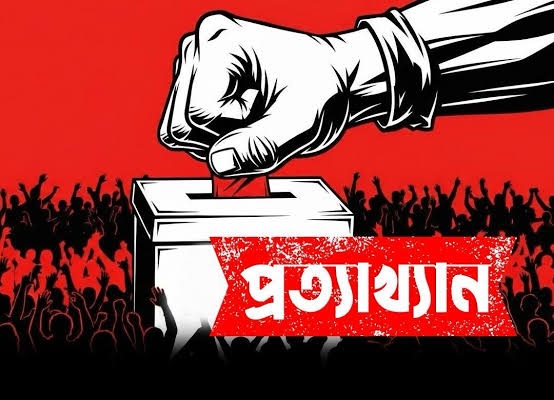
When Awami League President Sheikh Hasina declared in a virtual message, “If the ballot does not carry the boat symbol, none of our activists will go to vote,” not only party workers but also a vast section of ordinary citizens firmly decided to boycott the election. From the very morning of election day, polling stations across the country appeared deserted. Videos and photographs published in the media showed empty booths and election officials passing idle time. In some polling stations, even dogs were seen sleeping and those images quickly went viral online. In Bangladesh’s electoral reality, most voters typically cast their ballots before noon. Yet when officials announced at 12:00 pm that 32.88 percent of the vote had been cast, the claim was both absurd and detached from reality. By the afternoon, this number was magically inflated and publicly broadcast, which was nothing more than a shameless fabrication. In several districts, including Jhenaidah, result sheets already signed by presiding officers appeared in the media the night before the election. This blatant fraud proved that the results had been predetermined and that the election was merely a staged drama. By depriving citizens of their voting rights, the illegal Yunus government installed its collaborators in power, a fact now evident even to the international community. International observers have raised questions about the transparency of the election, and the people of Bangladesh have shown utter contempt for its results. From the morning of 12 February, a festival of ballot stuffing began in various parts of the country and these events were reported by several international media outlets.

In previous elections, the Awami League’s single vote share averaged between 40 percent and 50 percent. Given the severe conditions that emerged under the Yunus administration, at least 60 percent of the population, in solidarity with the Awami League, stayed home and boycotted this farcical election. The trust earned during Awami League rule through safeguarding the spirit of the Liberation War, development, and governance has only grown stronger under the authoritarian rule of Dr. Yunus. The people have come to realize that there is no alternative to the Awami League when it comes to preserving the continuity of development and resisting extremism.

The farcical election of 12 February 2026 will remain in Bangladesh’s history as a burning testament that no election in this country gains legitimacy without the participation of the Awami League. Despite all attempts, intimidation, and coercion by the illegal Yunus regime and its collaborators, they failed to involve ordinary citizens in their sham election. They also failed to erase the name of the Awami League from the hearts of the people. Rather, every act of repression and deprivation has brought the Awami League even closer to the masses. The boycott of the 12 February election proves that the people of this country will make no compromise with democracy, and they eagerly await the return of Bangladesh under the leadership of the Awami League to the Golden Bengal envisioned by Bangabandhu and inspired by the spirit of the Liberation War.

Tag :

কমেন্ট করুন

Your email address will not be published. Required fields are marked *

Save Your Email and Others Information

About Author Information

জনপ্রিয়

Glorifying War Criminals in an Illegal Parliament During the Month of Independence: A Shameful Chapter in History and an Ultimate Act of National Betrayal

Ballots Without the Boat and Polling Stations Without People: A Chronicle of a Historic Public Rejection

Update Time : 08:38:37 pm, Thursday, 12 March 2026

Ballots Without the Boat and Polling Stations Without People: A Chronicle of a Historic Public Rejection

12 February 2026 will not be remembered in Bangladesh’s political calendar merely as the day of an election. Rather, it will be engraved in history as a shameful moment that drove the final nail into the coffin of democracy. By conspiratorially excluding the Bangladesh Awami League, the party that led the great Liberation War, from the political arena and the electoral process, the unconstitutional interim government led by Dr. Yunus staged a one sided and orchestrated farce. The conscious citizens of this country rejected it with deep contempt. This election was by no means a process to obtain the people’s mandate. Instead, it was a shameless rehearsal aimed at installing loyalists and collaborators of an illegal government into positions of power under the guise of legality. The drama staged before the entire nation in the name of an election has effectively pushed the democratic framework of the country toward destruction and plunged the state into an uncertain darkness.

If we analyze the long journey of the Bangladesh Awami League as a symbol of the people’s trust in Bengal and examine the trajectory of its public support, it becomes evident how deeply rooted the party is in the soil and among the people of this land. After the tragedy of 1975, when Sheikh Hasina, the daughter of Bangabandhu, returned to Bangladesh in 1981 following years of exile, she united the fragmented Awami League under a thread of ideological unity. In the 1991 election, despite remaining out of power for a long time, the people voted massively for the Awami League purely out of ideological conviction, securing 30.1 percent of the vote. Later, following the intense mass movement led by Sheikh Hasina against the farcical election of 15 February 1996 under the BNP government, the Awami League won 37.4 percent of the vote in the election of 12 June 1996 and formed the government. From 1996 to 2001, Sheikh Hasina’s government became the first in Bangladesh’s history to complete a full term and peacefully hand over power to a caretaker government, setting a remarkable democratic precedent. Although the Awami League was kept out of power in the 2001 election through deep international and domestic conspiracies, the party still secured 40.02 percent of the vote, which was even higher than the single vote share of the victorious alliance.

Between 2001 and 2006, the horrifying misrule of the BNP Jamaat alliance, particularly the barbaric grenade attack on Sheikh Hasina on 21 August 2004, led the people of Bangladesh to once again place their full trust in the Awami League during the 2008 election. With 48.04 percent of the vote and a two thirds parliamentary majority, the Awami League led Grand Alliance government took Bangladesh to unprecedented heights of development. During fifteen consecutive years in power, mega projects such as the Rooppur Nuclear Power Plant, Padma Bridge, Metro Rail, Karnaphuli Tunnel, and the Elevated Expressway, along with remarkable economic progress, instilled a firm belief among the people that Bangladesh was safest in Sheikh Hasina’s hands. The transformation from Digital Bangladesh to Smart Bangladesh opened new horizons for the country’s youth, visions that were completely shattered during the rule of Dr. Yunus.

That democratically elected government was removed from power on 5 August 2024 through what appeared to be a meticulously designed color revolution and regime change. After seizing power under the leadership of Dr. Yunus, this group began an unprecedented campaign of repression. The brutal persecution unleashed against leaders and activists of the Bangladesh Awami League, the Chhatra League, and its affiliated organizations defies the imagination of any civilized society. Thousands of activists were detained without trial, and many died in prison due to lack of medical treatment. Even the fundamental right to education of several hundred thousand students was stripped away simply because of their alleged association with the Chhatra League. Under the Yunus administration, administrative failure led to a complete collapse of law and order, giving rise to a culture of mob violence across the country.

Perhaps the most painful aspect was the humiliation and disrespect shown toward the heroic freedom fighters of the Liberation War. The demolition of the historic House No. 32 in Dhanmondi, a place filled with the memories of Bangabandhu, and the disgraceful incidents of placing garlands of shoes around the necks of freedom fighters occurred with state support. These events were witnessed by the people of Bangladesh with tearful eyes. As memorials of the Liberation War were destroyed, the hearts of patriotic citizens bled. At the same time, the resurgence of leaders and activists of Jamaat and Shibir who had opposed the Liberation War, and the rise of extremist groups, became increasingly visible. Amid rising lawlessness, uncontrolled inflation, and the lack of safety in daily life under the Yunus administration, many people began to say that life had been better before. Consequently, the popularity of the Awami League surged to levels higher than ever before. Alarmed by this reality and fearing a massive Awami League victory if the party participated in the election, the occupying Yunus government imposed unconstitutional bans and restrictions on the party. In essence, the entire blueprint of the 12 February election was drawn up to exclude the party that led the country’s struggle for independence.

When Awami League President Sheikh Hasina declared in a virtual message, “If the ballot does not carry the boat symbol, none of our activists will go to vote,” not only party workers but also a vast section of ordinary citizens firmly decided to boycott the election. From the very morning of election day, polling stations across the country appeared deserted. Videos and photographs published in the media showed empty booths and election officials passing idle time. In some polling stations, even dogs were seen sleeping and those images quickly went viral online. In Bangladesh’s electoral reality, most voters typically cast their ballots before noon. Yet when officials announced at 12:00 pm that 32.88 percent of the vote had been cast, the claim was both absurd and detached from reality. By the afternoon, this number was magically inflated and publicly broadcast, which was nothing more than a shameless fabrication. In several districts, including Jhenaidah, result sheets already signed by presiding officers appeared in the media the night before the election. This blatant fraud proved that the results had been predetermined and that the election was merely a staged drama. By depriving citizens of their voting rights, the illegal Yunus government installed its collaborators in power, a fact now evident even to the international community. International observers have raised questions about the transparency of the election, and the people of Bangladesh have shown utter contempt for its results. From the morning of 12 February, a festival of ballot stuffing began in various parts of the country and these events were reported by several international media outlets.

In previous elections, the Awami League’s single vote share averaged between 40 percent and 50 percent. Given the severe conditions that emerged under the Yunus administration, at least 60 percent of the population, in solidarity with the Awami League, stayed home and boycotted this farcical election. The trust earned during Awami League rule through safeguarding the spirit of the Liberation War, development, and governance has only grown stronger under the authoritarian rule of Dr. Yunus. The people have come to realize that there is no alternative to the Awami League when it comes to preserving the continuity of development and resisting extremism.

The farcical election of 12 February 2026 will remain in Bangladesh’s history as a burning testament that no election in this country gains legitimacy without the participation of the Awami League. Despite all attempts, intimidation, and coercion by the illegal Yunus regime and its collaborators, they failed to involve ordinary citizens in their sham election. They also failed to erase the name of the Awami League from the hearts of the people. Rather, every act of repression and deprivation has brought the Awami League even closer to the masses. The boycott of the 12 February election proves that the people of this country will make no compromise with democracy, and they eagerly await the return of Bangladesh under the leadership of the Awami League to the Golden Bengal envisioned by Bangabandhu and inspired by the spirit of the Liberation War.